
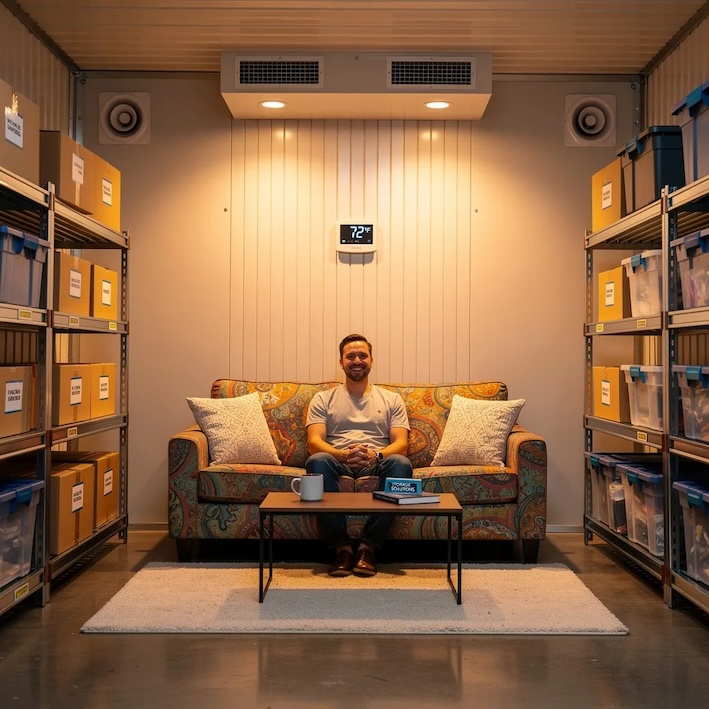
Protect your valuable belongings with temperature and humidity-regulated storage designed to prevent damage from extreme weather, moisture, and environmental fluctuations.
Different storage types offer different levels of protection. Choose the option that best fits your needs and budget.
Regulates both temperature and humidity. Uses HVAC systems and dehumidifiers to protect against heat, cold, and moisture.
Protects against extreme heat and cold but doesn't regulate humidity. Works for items sensitive to temperature changes but not affected by moisture.
Uses air conditioning to prevent heat damage. Doesn't control humidity or protect against cold. Works best for heat-sensitive items.
Maintains warmth during cold months. Offers no humidity control or cooling.
Store these items in climate-controlled units to prevent damage:
Computers, televisions, gaming systems, smartphones, tablets, stereos, cameras, DVDs, vinyl records, CDs
Leather furniture, wooden furniture, antiques, upholstered pieces, household appliances
Pianos, guitars, violins, drums, woodwind instruments. Temperature and humidity changes warp wood, crack finishes, and make instruments unplayable.
Artwork, paintings, sculptures, photographs, antiques, collectibles, jewelry
Important paperwork, archives, books, certificates, diplomas, photo albums
Vintage clothing, wedding dresses, quilts, leather goods and accessories
Wine collections, medications, cosmetics, candles
Items That Don't Need Climate Control: Save money by using standard units for these items: Outdoor furniture, garden tools, lawn equipment, camping gear, vehicles, bicycles, weather-resistant plastic bins, tools, hardware, construction materials
High humidity regions see more mold, mildew, rust, and corrosion. Areas with extreme temperature swings cause materials to expand and contract, leading to cracks and warping. Extreme heat warps plastic, dries out leather and wood, and damages electronics. Severe cold cracks wooden items and damages sensitive materials.
Short-term storage of a few weeks typically works fine in standard units. Longer storage periods increase the risk of temperature and humidity damage.
Expensive electronics, antiques, and wine benefit from climate control. Irreplaceable items like family heirlooms, photo albums, and wedding memorabilia are worth protecting with climate control.
Materials expand when hot and contract when cold. Repeated cycles cause wood to crack, plastic to warp, leather to dry and crack, and photographs to yellow and become brittle.
High humidity creates the perfect environment for mold and mildew. These spread rapidly and cause staining, odors, and structural damage. Humidity also corrodes metals, causes wood and paper to swell, and damages fabrics.
Climate-controlled facilities are typically sealed and maintained. This creates an environment less attractive to rodents and insects. Regular cleaning and prohibition of food storage further minimize pest risks.
Ventilation systems maintain airflow and filter out dust and airborne particles that settle on belongings during storage.
Garages, attics, and basements experience major temperature and humidity fluctuations. Climate-controlled storage facilities maintain stable conditions your home cannot match.
Not all facilities meet the same standards. Some advertise climate control but only provide minimal temperature regulation.
Visit the facility and check the unit for moisture, proper insulation, and sealed construction.
Take these steps even with climate control:
Check that everything is completely dry and free of mold before storing. One damp item can spread mold throughout your unit.
Even brief exposure to moisture causes problems.
Use moving blankets, plastic wrap, or sealed plastic bins to prevent mold spread.
Replace desiccants according to package directions.
Most facilities make reasonable efforts to maintain conditions but aren't legally responsible for damaged items.
Climate-controlled units come in various sizes:
Boxes, clothing, small items
Sports equipment, small furniture, mattresses, boxes
Large furniture, appliances, multiple rooms of belongings
Contents of larger homes, including appliances
Look for full insulation for better temperature stability.
Decide if you need around-the-clock access or if scheduled appointments work for you.
Facilities vary in security features like cameras, gate access, individual locks, and on-site management. Choose protection appropriate for your belongings.
Climate-controlled units are typically located inside buildings for extra protection.
Use the search tool on this page to compare climate-controlled storage facilities in your area. Compare prices and features, read customer reviews, and reserve online instantly.
Need help? Call 1-866-690-7730 to speak with a storage expert who can help you find the right protection for your belongings at the best price.